



-


-
Statistics
- How many companies went online during the quarantine period
How many companies went online during the quarantine period
The study showed what has changed for entrepreneurs in the spring of 2020 and how the crisis has affected the business of customers of digital services.
The events taking place in the country and the world are generally already clear to everyone, but it is always useful to have figures in front of you and identify patterns. We hope that the results of the study will help to better understand what is happening and what to prepare for in order to make viable decisions.
The study will be of interest to two categories of readers:
- Business representatives. For you, the study can be a reference point for what is happening with partners, competitors, etc...;
- digital contractors: agencies and freelancers. The very fact of your work depends on client business, which means that your customers have been affected in one way or another by the current economic situation. It will be useful to understand the main trends of what is happening.
Source: Workspace
Portrait of respondents
Spring was far from the best period for entrepreneurs, and most companies were busy with trivial survival and transferring business to new rails. Nevertheless, some of them willingly answered our questions, and we got a sufficient sample to draw some conclusions. We would like to take this opportunity to thank the respondents for their responsiveness and sincerity! Thanks to your frankness, we were able to prepare this study.
In the survey we took into account the industries in which the respondents are engaged, their regions of location, size (micro, small and medium-sized businesses), business direction (b2b/b2c) and a number of other aspects.
142 representatives of small and medium-sized businesses took part in the survey. All of them are customers of digital services.
Survey results
We asked the entrepreneurs several questions about the challenges they faced, the decisions they made, and how they allocate their budgets. The results of the survey show that the current crisis is unlike previous ones in terms of its consequences. First of all, by its scale, but also by the types of industries it affected first of all.
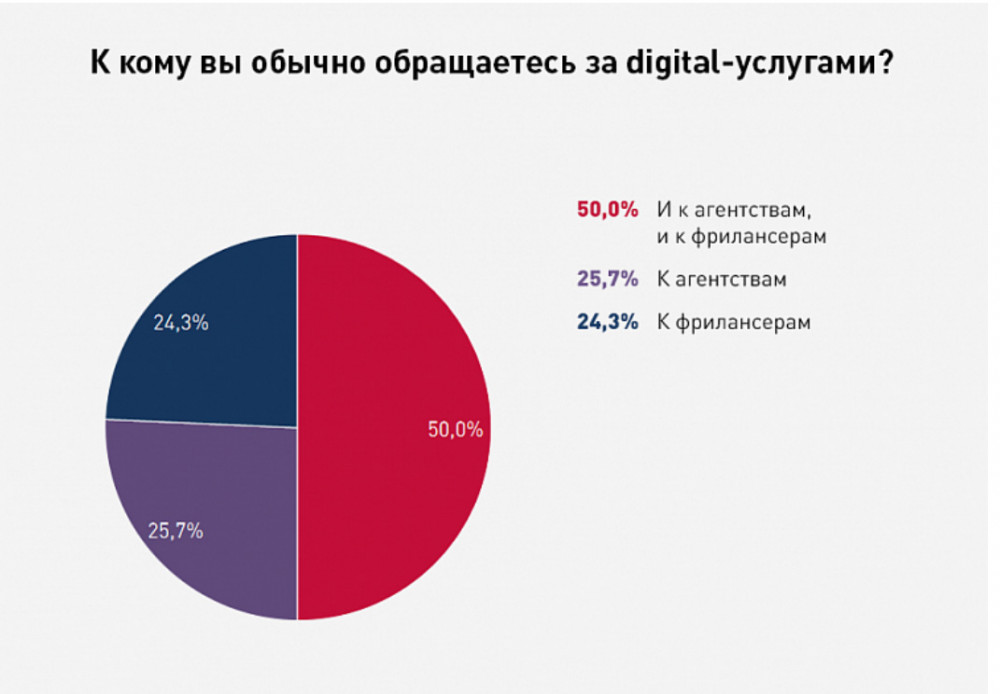
Half of respondents use both agencies and freelancers depending on different tasks. It is logical that the larger the client's staff, the more inclined they are to turn to agencies - companies with less than 50 employees more often choose freelancers as contractors. This is probably due to higher requirements and more complex process of task realisation in large companies. Also, b2b-oriented companies turn to agencies more often.
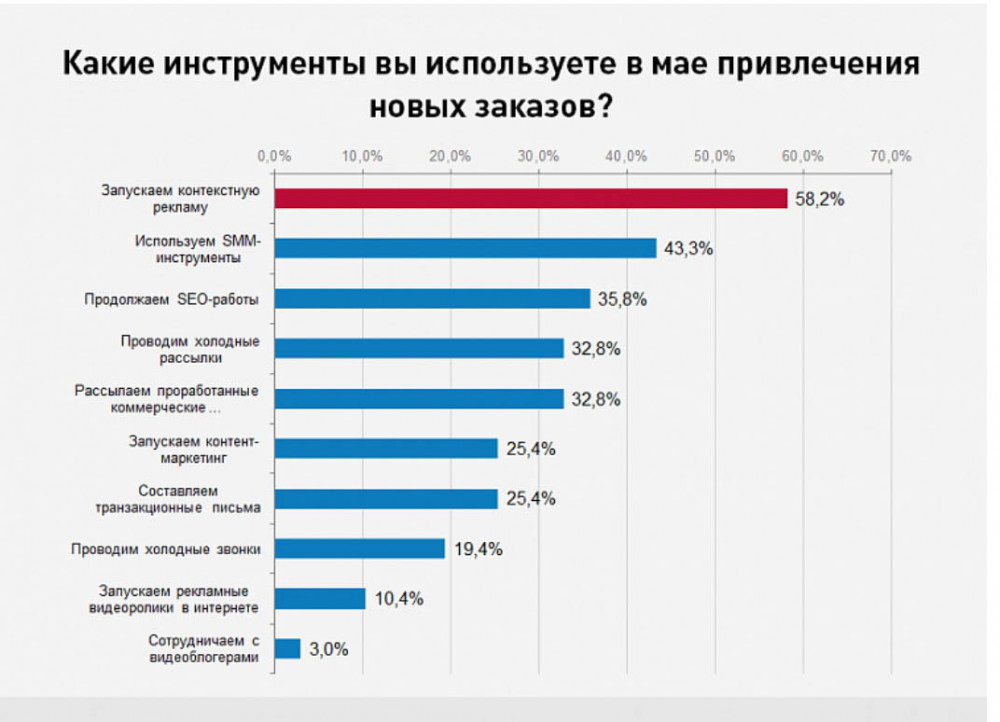
In the context of strict cost minimisation, entrepreneurs have to make difficult choices. With all the wealth of promotional tools, 58% of respondents use contextual advertising. It is more often chosen by digital contractors, whom we asked together with CMS Magazine in the May survey of agencies. Apparently, contextual advertising is the most important online tool for sales today.
In second place in popularity is SMM-promotion. Its demand can be explained by the fact that some small and microbusinesses do not have their own websites and sell directly in social networks.
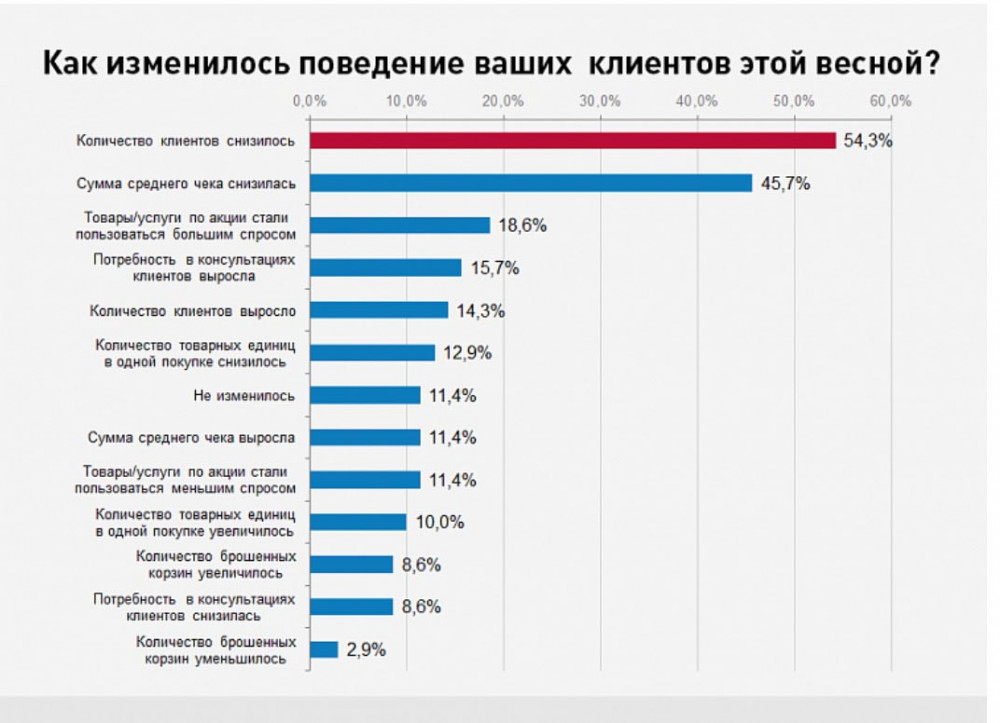
More than half of respondents reported a decrease in the number of customers and just under half reported a decrease in the amount of the average cheque. However, there was a small number of these among those from the food retail and IT industries. This is most likely due to the fact that such goods/services have become more likely to be bought online during the period of self-isolation.
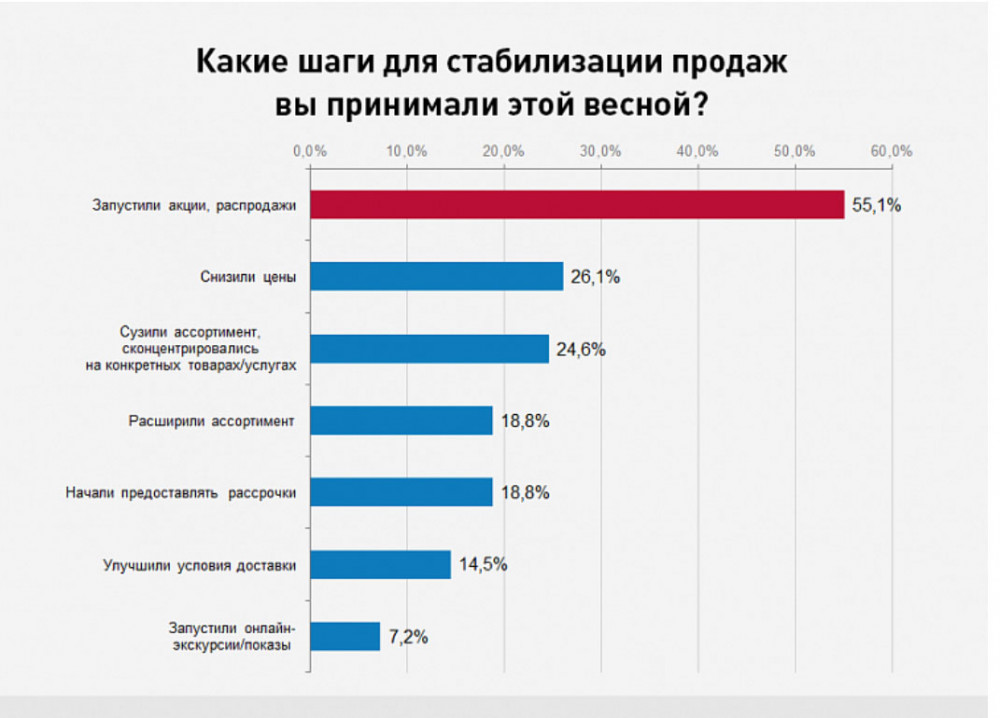
The majority of respondents (55%) not only reduced prices, but also launched promotions and had sales. Of those who have started giving customers instalments, the majority are in the industrial and property sales sectors. This is where the average cheque is the largest, and companies took this step in order not to lose customers during the crisis. In the b2c sector, instalments are virtually non-existent.
Delivery was improved mainly by companies selling food products. With increased competition, this step was a great solution.
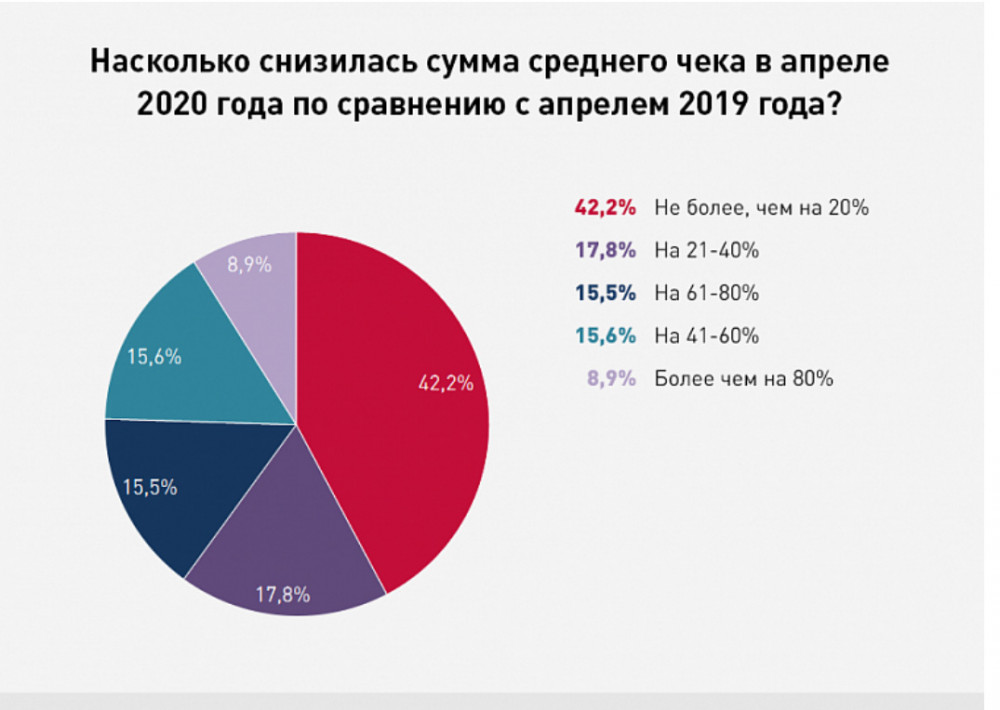
We asked entrepreneurs whether the amount of the average cheque in April 2020 had changed from April 2019. 70% of respondents said this figure had fallen: you can see exactly how much in the chart above.
Fortunately, the largest segment of respondents (42%) characterised the decrease as minor (no more than 20%). However, almost 9% of respondents saw their cheque drop by 80% or more. This option was predictably chosen by representatives of the beauty and entertainment industry, who were forced to close down and suffered the most significant losses.
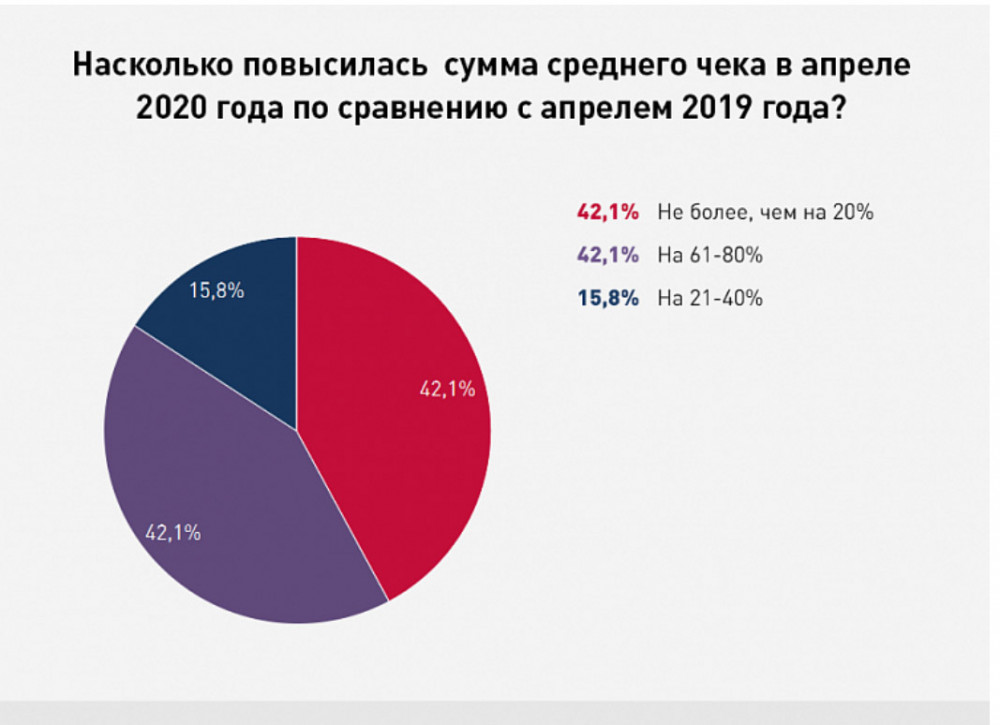
21% of respondents said that the amount of their cheque had increased over the same period: the chart shows how much. Note that there are two equal-sized segments with a significant difference in the increase in the average cheque amount.
It is important to add that the 61-80% option was chosen more often by representatives of IT companies. A possible explanation for this is an increase in demand for IT products and services due to the need for businesses to urgently move online.
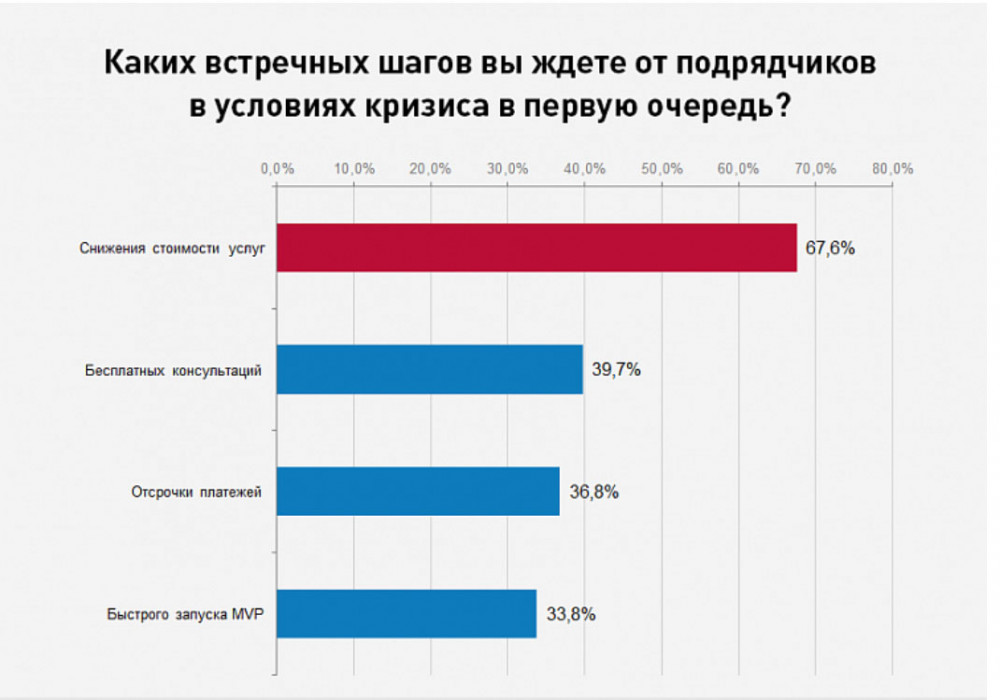
Quarantine measures have forced 75 per cent of companies to go online, but a fifth of respondents said the specifics of their business prevented them from going online.
Just under a third of respondents found the strength and means to go online, but only partially.
The severity of the self-exclusion order had no effect on only 4% of respondents, who appear to have no choice but to continue operating as before or close down altogether.
Obviously, the crisis has taught many business sectors to work remotely. Quarantine measures have forced 75% of respondents to go online in whole or in part. And many people liked it, because among the advantages of remote work are savings on renting office space and buying equipment. Also, people who work remotely are generally less ill, as they communicate less often with colleagues and travel in transport
Automate all business processes as much as possible
Pay special attention to the automation of analytical and marketing processes: there are dozens of both paid and free solutions online.
Do not cut promotion budgets
Or at least reduce minimally. In the extreme case, leave the most basic: what will help your business to stay afloat in the crisis and survive in the conditions of increased competition. There are no universal promotion tools, they are different for each business.
The good news is that most entrepreneurs do not plan to cut budgets for contextual advertising and web development.
Don't be afraid to work online!
If it used to be encouraging advice, today it is a direct guide to action. Spring 2020 has helped companies prove to themselves how much they can be digitised.
In essence, today there is choice without choice. We should not accept this, but work and move forward.
ANY QUESTIONS?