



-


-
Statistics
- Top trends in the world: internet and social media statistics
Top trends in the world: internet and social media statistics
The most important things about the state of the internet for 2021
Here are the top statistics and trends on the digital industry globally as of January 2021:
- Global Population: as of early 2021, the world population was 7.83 billion. According to the UN, this number is now growing at 1% per year. This means that the global population has increased by more than 80 million people since the beginning of 2020.
- Mobile devices: today, 5.22 billion people use a mobile phone - 66.6% of the world's population. Since January 2020, the number of unique mobile users has increased by 1.8% (93 million), while the total number of mobile connections has increased by 72 million (0.9%) to reach 8.02 billion by early 2021.
- Internet: 4.66 billion people worldwide are using the internet in January 2021, an increase of 316 million (7.3%) from last year. Internet penetration is now at 59.5 per cent. However, COVID-19 has had a significant impact on the collection of data on the number of internet users, so the actual figures may be higher.
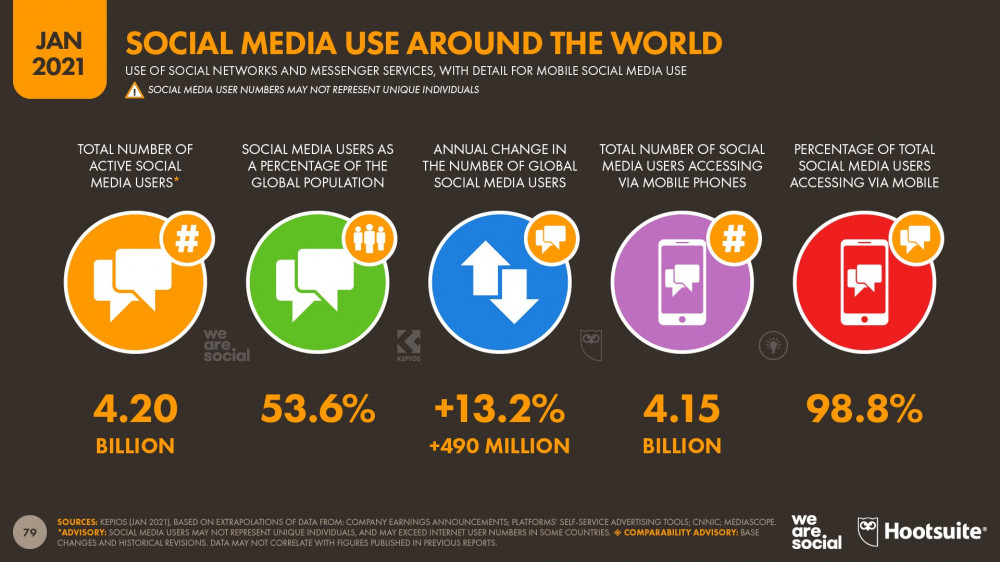
- Social media: there are now 4.20 billion social media users worldwide. This figure has grown by 490 million in the last 12 months, representing an increase of more than 13% year-on-year. Social media will be used by 53.6 per cent of the world's population in 2021.
Source: web-canape.
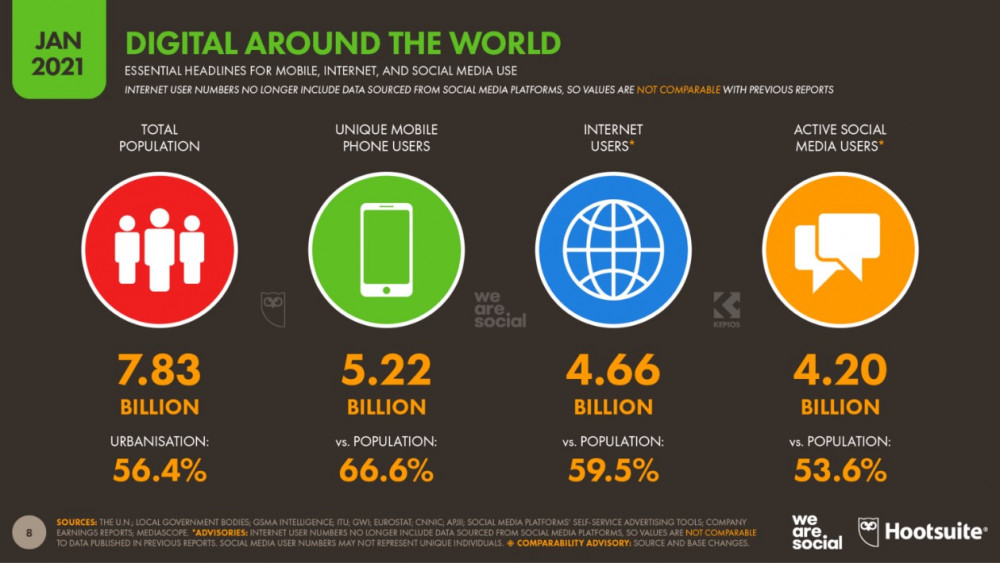
But what does all this data tell us about what people actually do online? You'll find the detailed findings below.
Social media audience growth has skyrocketed
The number of social media users has increased by more than 13 per cent in the last year. By the beginning of 2021, almost half a billion new users had registered on social networks.
On average, more than 1.3 million new accounts were created every day during 2020, which is about 15.5 new users per second.
The average social media user now spends 2 hours and 25 minutes on these platforms every day, which equates to about one day a week minus sleep time.
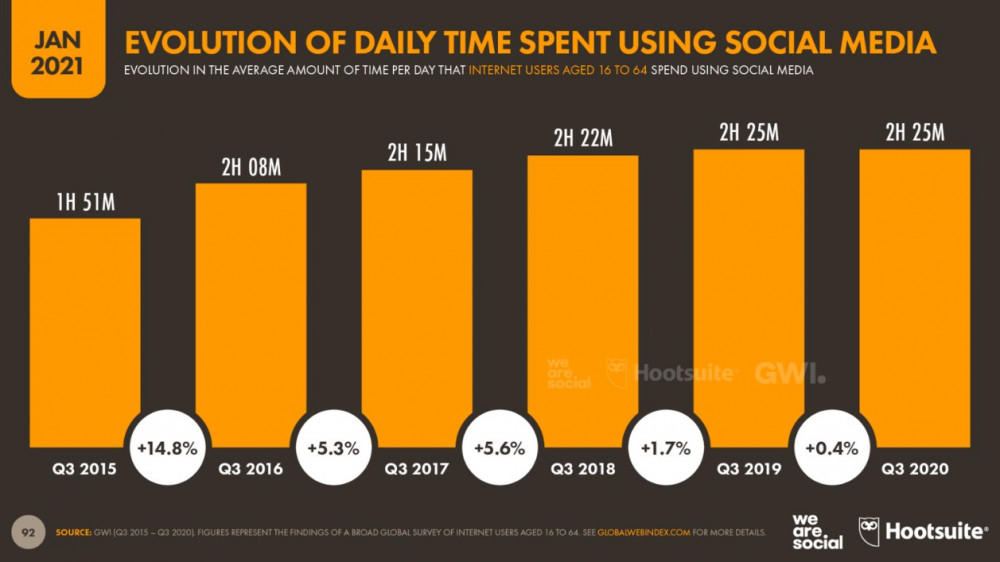
If the trend continues, all users in the world will have spent a total of 3.7 trillion hours on social media in 2021, equivalent to over 420 million years of cumulative human existence.
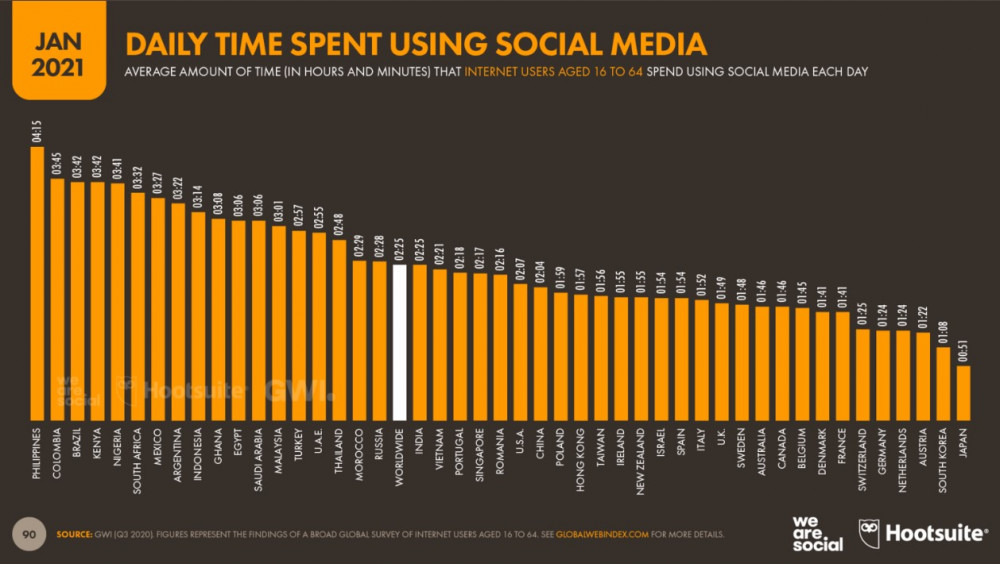
However, as we have seen in previous years, there are significant differences between countries.
In 2021, Filipinos are still the most active social media users in the world, spending an average of 4 hours and 15 minutes a day there. That's half an hour more than Colombians, who came in second place.
At the opposite end of the ranking are users in Japan, who sit on social networks for less than an hour a day. However, their figure for this year -51 minutes - is 13 per cent higher than last year's figure.
Mobile phones have become a priority device
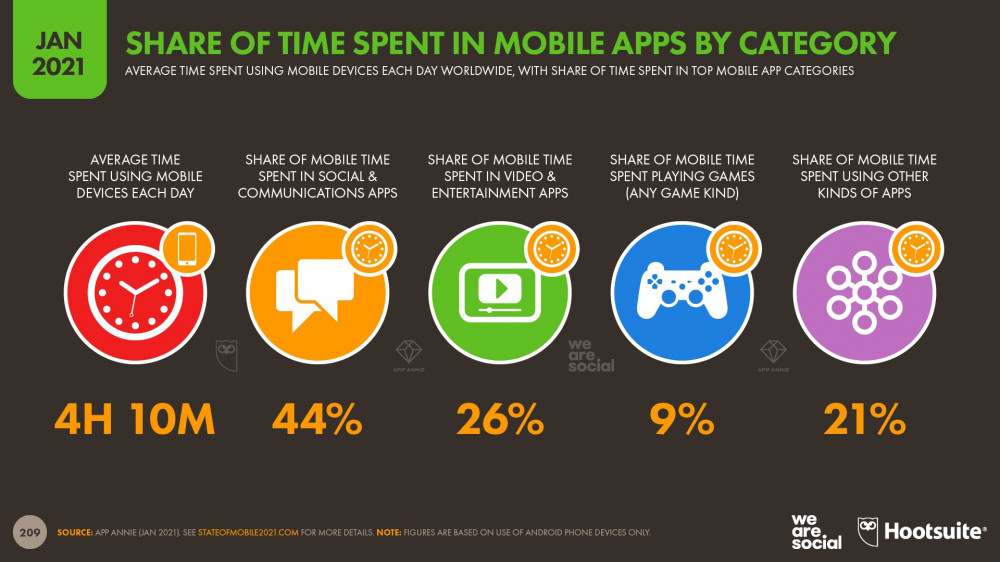
Two-thirds of the world's population use mobile phones every day. Meanwhile, according to App Annie, Android users now spend more than 4 hours a day on their phones. It turns out that Android users spent more than 3.5 trillion hours on their phones in the 12 months of 2020.
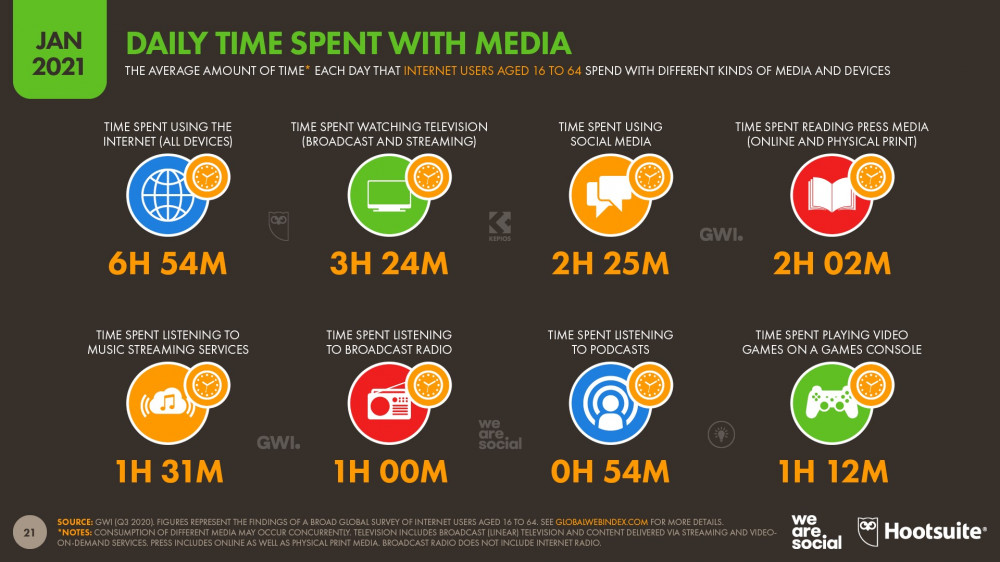
According to the latest research from GWI, the average internet user now spends 3 hours and 39 minutes every day browsing the internet from their mobile, in comparison watching TV takes 3 hours and 24 minutes a day.
This means that the average internet user now spends around 7% more time using apps that require an internet connection on their phone than watching TV.
However, as you can see in the slide below, mobile devices only account for about half of our daily internet time.
We're spending even more time online
Overall, the average user now spends almost 7 hours a day online from all devices - over 48 hours a week, 2 full days out of 7.
Assuming the average person sleeps between 7 and 8 hours a day, that means we now spend about 42% of our waking hours online. We are online about the same amount of time we spend sleeping.
That said, the amount of time people spend online each day is increasing every year. According to the latest GWI data, the average internet user spent 16 minutes more online every day in the third quarter of 2020 than in the third quarter of 2019, an increase of 4% compared to the same period last year.
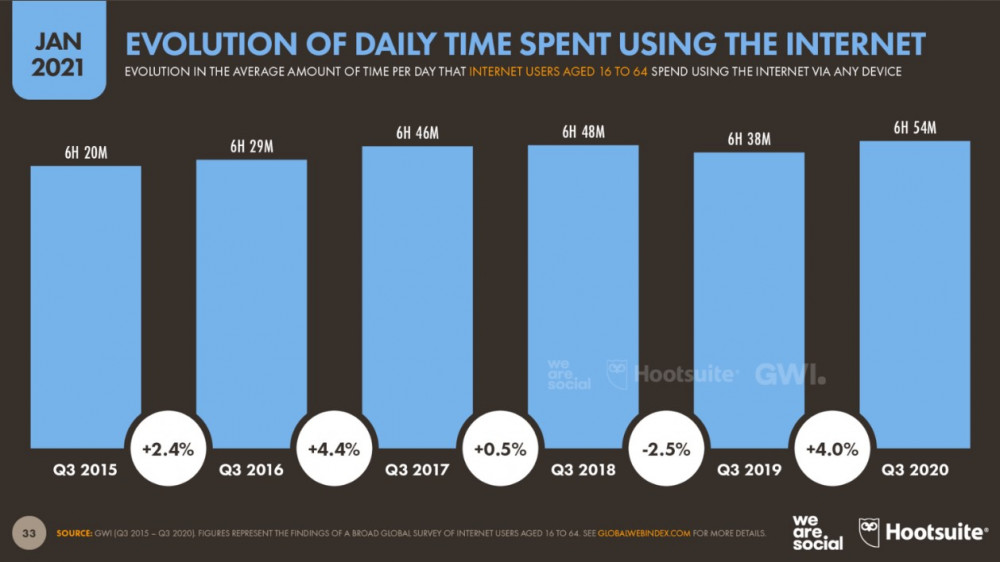
If the figure remains at this level through 2021, over the course of the year, users around the world will spend nearly 12 trillion hours online, which is more than 1.3 billion years of cumulative human time.
But again, the data varies greatly from country to country.
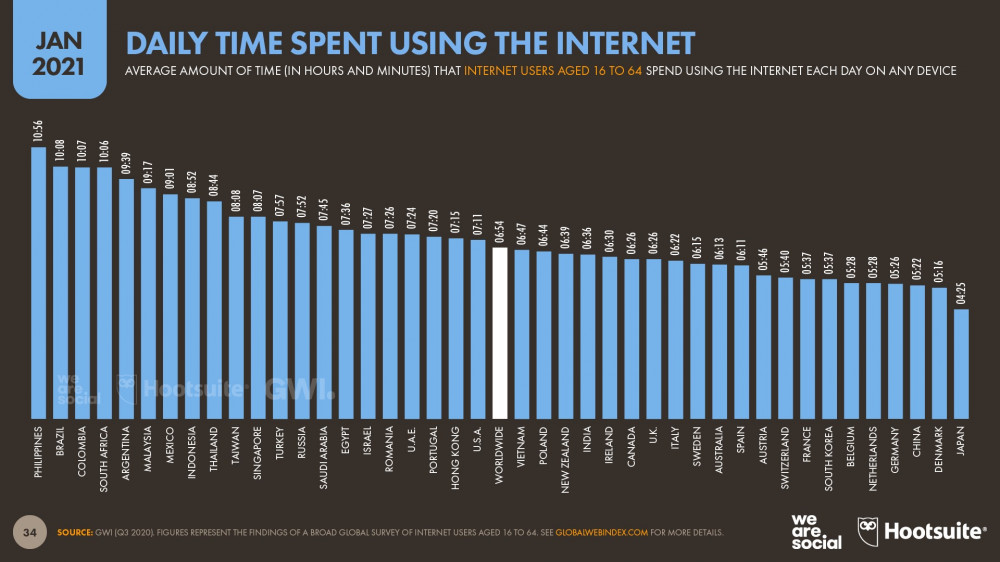
Filipinos spend the most time online - almost 11 hours a day. Brazilians, Colombians and South Africans spend more than 10 hours a day online on average. At the other end of the scale are again the Japanese, who are online for less than 4.5 hours a day. Interestingly, the Chinese are also at the lower end of the range, at just 5 hours and 22 minutes a day. That's 1.5 hours less than the global average of 6 hours 54 minutes.
The search habits of internet users have changed
Searching for information is the main reason people go online. Nearly two-thirds of the world's internet users say so.
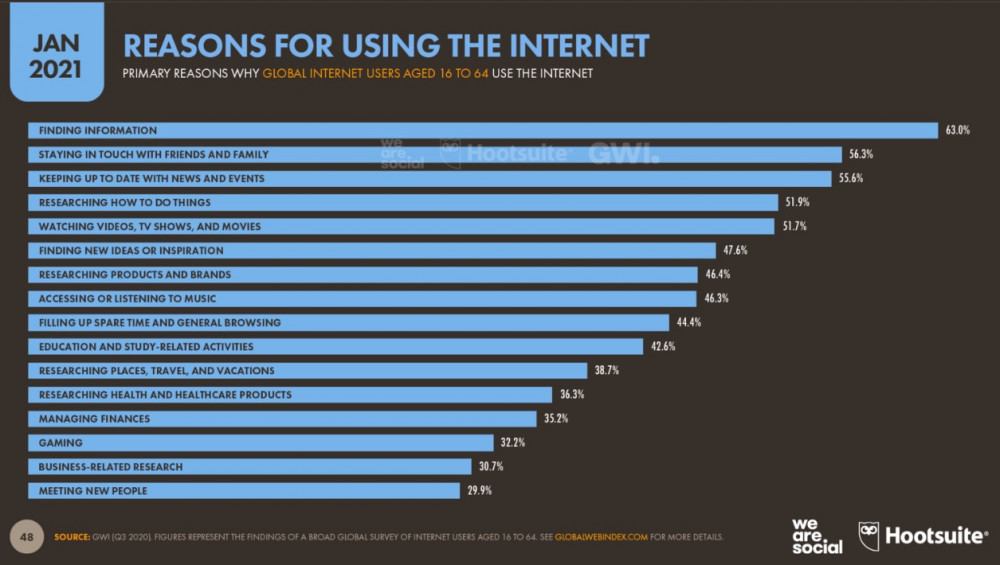
However, search behaviour is changing, and these changes have important implications for anyone hoping to attract an online audience.
Traditional search engines are still an integral part of the search process, with 98% of respondents saying they use search engines every month.
Meanwhile, more than 7 in 10 survey participants also say they now use at least one other tool besides text search to find information online.
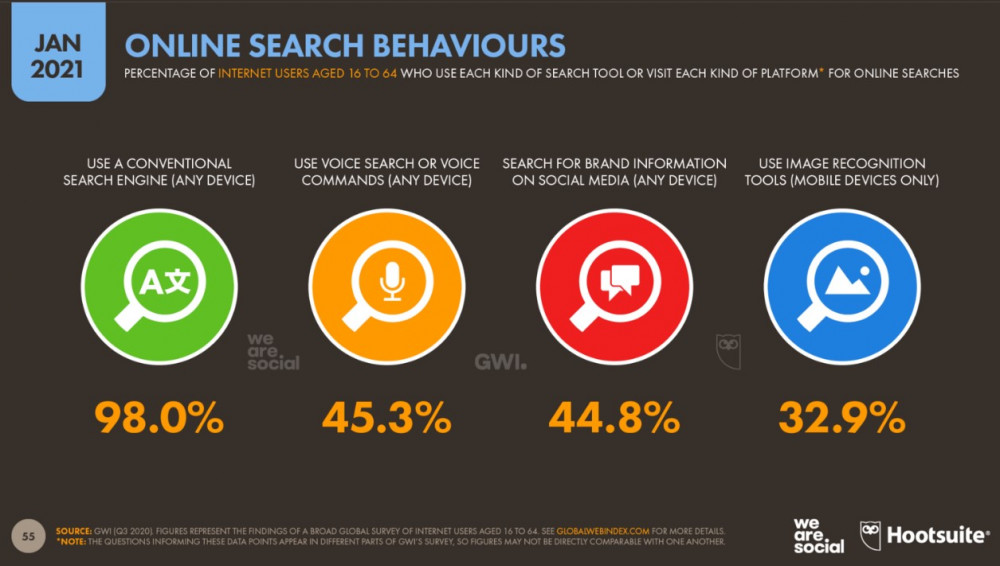
Voice interfaces are the most popular alternative to text search, with 45% of internet users saying they have used voice search or voice commands in the last 30 days. Nearly a third of internet users also regularly use image recognition tools on their mobile devices, with Pinterest Lens and Google Lens particularly loved in Latin America and South East Asia.
But perhaps the most interesting trend in search behaviour is the rise in popularity of social media searches. Approximately 45% of internet users worldwide say they turn to social media when looking for information about products or services they are considering buying.
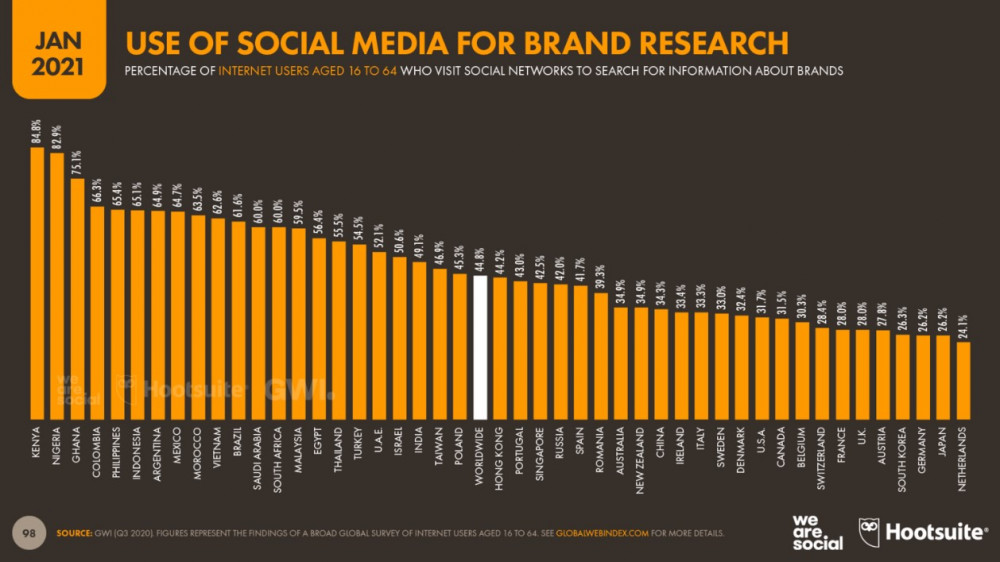
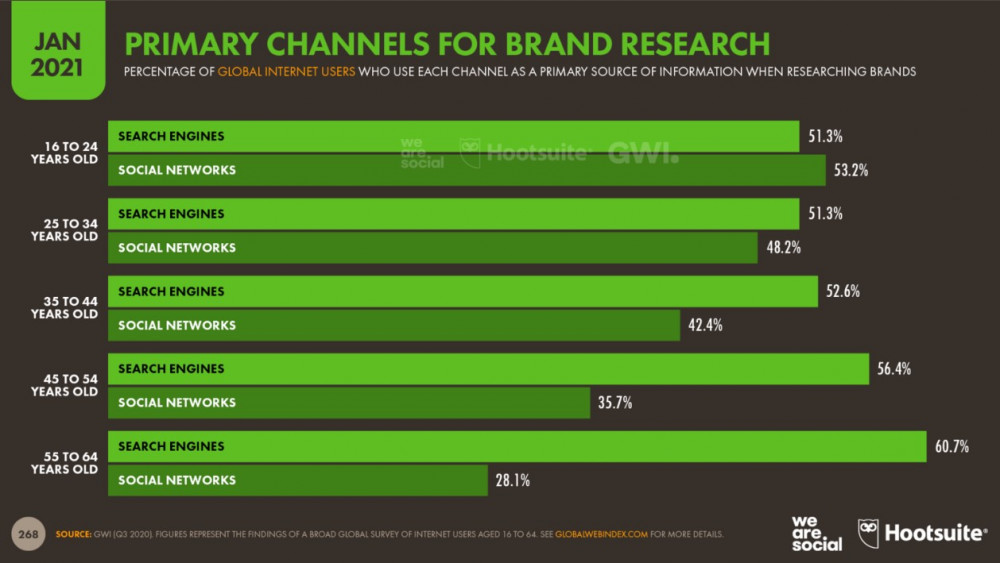
Among young people, the figure is even higher, with members of Generation Z saying they are more likely to look for brands on social media than on search engines.
Using multiple devices to access the internet
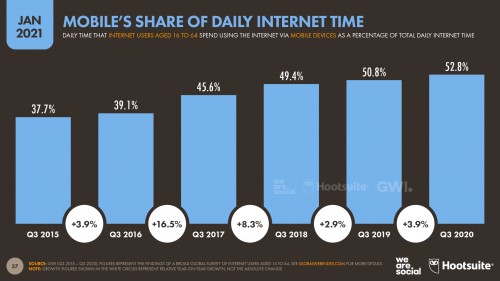
Mobile phones now account for 53% of the time people spend online. But data shows that other devices still play an important role in our lives when it comes to using the internet.
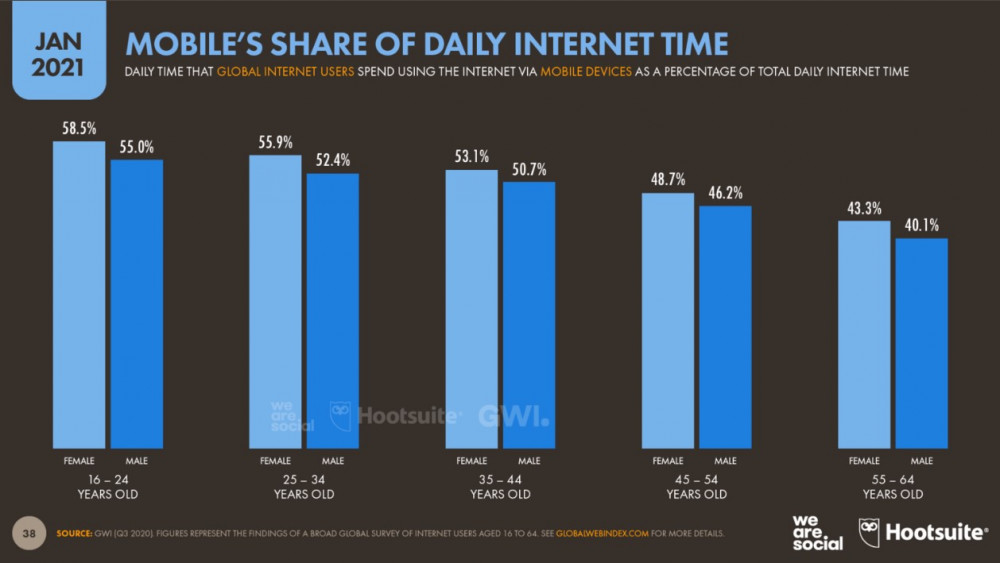
Interestingly, the proportion of time women spend online from mobile devices is higher than men.
According to GWI , 9 out of 10 internet users go online from smartphones, but two-thirds also say they use a laptop or desktop computer to access the internet.
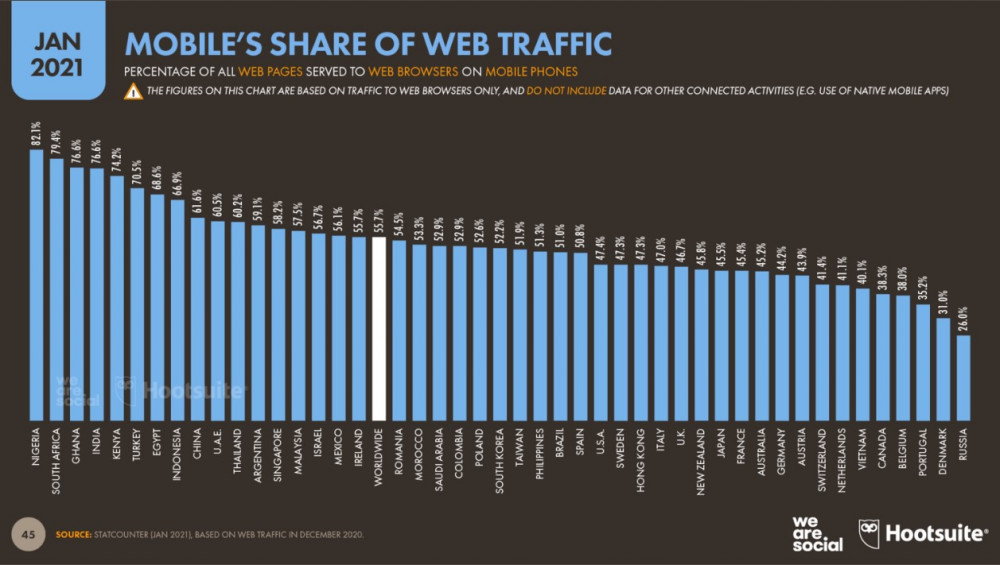
It is worth noting that the mobile phone is now the most popular device for going online in all countries, but the gap between mobile phones and computers is often small, especially in Western Europe.
Meanwhile, computers still account for a significant proportion of global internet activity. More than 40% of web pages visited in December 2020 were opened in web browsers on laptops and desktops, although the overall share of these devices decreased slightly compared to December 2019.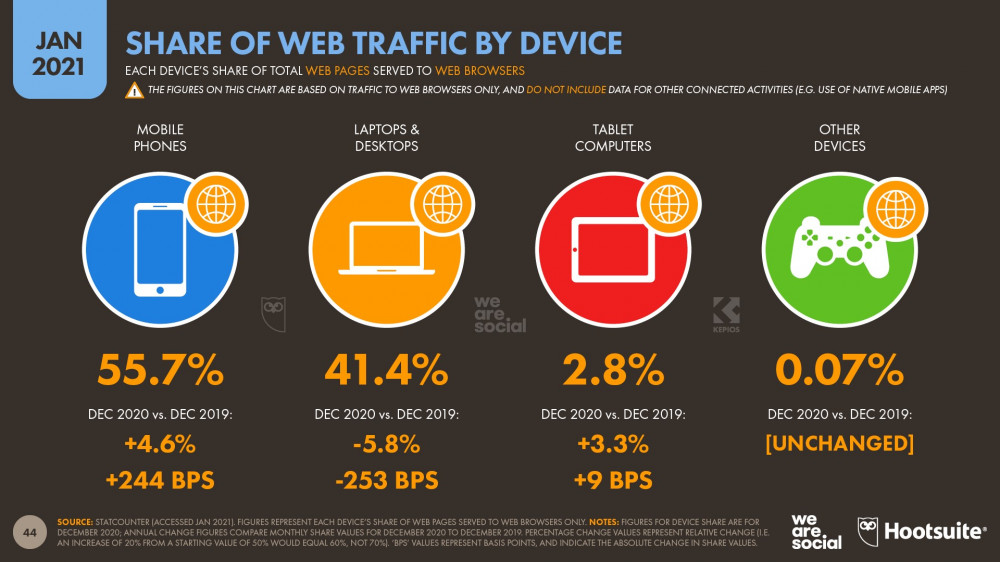
ANY QUESTIONS?