



-


-
Statistics
- SEO Statistics 2021
SEO Statistics 2021
Offline sales plummeted, all companies, restaurants and shops moved online, and those who had not previously paid attention to the website actively began to look for ways to promote it. Users who favoured offline shopping also had to adapt to the new conditions and master online shopping. If you want to be on the wave and increase online sales, to be aware of what solutions marketers use and what results they bring, you should take into account SEO statistics.
Separately, it is worth highlighting the role of the technology with which the website is created. If you look at statistics on the use of web technologies and statistics on the popularity of CMS in particular, you will notice that in the top of popularity - either platforms with a developed community, functionality and SEO-modules/plugins, or platforms that require a minimum of technical skills. Also in recent years, due to the boom of JavaScript frameworks, web applications have become more popular.
Custom solutions created with frameworks require a special approach to SEO, search engines are still poorly adapted to indexing such applications. Therefore, when choosing an option to create or update your website, it is better not to save on development and turn to experienced professionals or use a time-tested and well-documented solution. Investing in a platform that aligns with your SEO strategy will help you get more organic traffic and increase your visibility in search engine rankings. Source: madcats.
Search engine optimisation is constantly changing and evolving. Search algorithm updates force SEO specialists to look for new promotion strategies, and trends and tools that were popular a year ago may become irrelevant today. We have collected the most interesting and useful statistics that will help you make more informed decisions and tell you what guidelines to follow when building your SEO strategy.
Google accounts for over 70% of global desktop search traffic in 2021. (Source: NetMarketShare)
Google processes about 8 billion queries per day.
And their number continues to grow. (Source: Internet Live Stats).
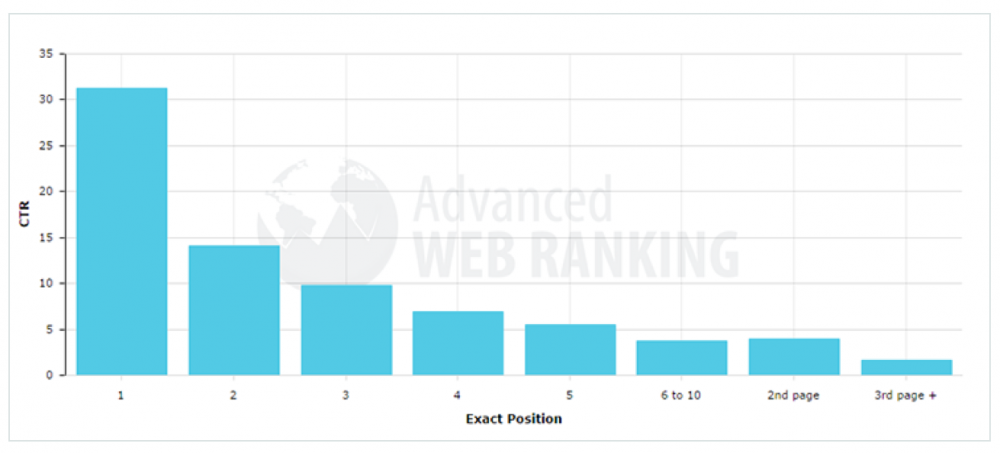
67.60% of all clicks come from the first five search results.Of those, about 30% come from the first result. (Source: Zero Limit Web)
53.3% of global traffic comes from organic search. (Source: BrightEdge)
55% of search queries come from mobile devices, while 42% come from desktops.
Therefore, it's important to keep website adaptability in mind. (Source: Statcounter)
75% of users never go further than the first page of search results.(Source: HubSpot)
SEO content statistics
Updating and republishing old blog articles can increase organic traffic by 106%.
Updating content is a great way to regain ranking. (Source: HubSpot)
About 40% of searches on Google produce results with images.
With the growing popularity of Pinterest, Instagram, and other similar platforms, consumers are increasingly focused on visual search. (Source: Moz)
Videos appear in organic search 50 times more often than text results.
There is less competition in the video content niche, and the probability of a video hitting the first page is about 11,000:1 compared to 500,000:1 for text content. (Source: SEO Inc.)
Business websites with a blog have 434% more indexed pages than those without a blog
If your company doesn't already have a blog, it's worth considering getting one. (Source: HubSpot)
Pages in the top 10 search engine results contain an average of 1,447 words.
But word count does not indicate quality and therefore does not directly affect position. (Source: BackLinko)
90.63% of pages don't get traffic from Google.
The main reasons are: lack of backlinks, shady linkbuilding and irrelevance to the search query. (Source: Ahrefs)
The first result on Google contains on average 3.8 times more backlinks than results 2-10.
This is still a major ranking factor. (Source: Backlinko)
Most title tags in Google match the keyword they rank for.But at the same time, using a keyword in a title tag has almost no correlation with a higher position on the first page of the search results. The same is true for the H1 tag. (Source: Backlinko)
Query statistics
92.42% of keyword phrases have a frequency of less than 10 queries per month.(Source: Ahrefs)
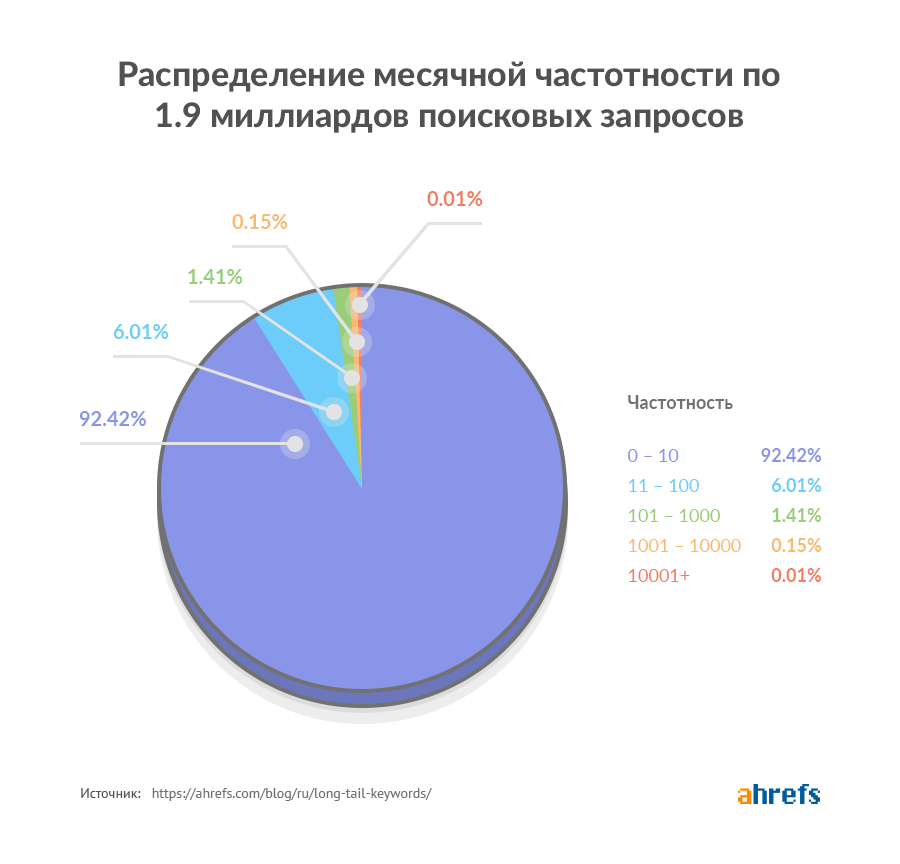
69.7% of search queries contain four words or more.
This disproves the myth that short search queries have a higher frequency than long ones. (Source: Ahrefs)
The number of outlet online (online shopping) searches increased by more than 60 per cent compared to 2020.
People are also more likely to be interested in low-cost items, health insurance and website hosting. (Source: Google)
8% of search queries are phrased as questions.
They usually begin with the words "Who," "What," "Where," "When," "Why," and "How." (Source: Moz)
Google changes 18% of search queries on its own.This can happen either due to errors in the query or other features of the search engine. (Source: Moz)
Google voice search statistics
Voice search takes up 27% of Google's search queries.
(Source: Google)
Sites with HTTPS protocol occupy 70.4% of pages in search results.
SSL encryption is a must for any self-respecting resource. (Source: Backlinko)
The average length of a voice search result is 29 words.
Google favours short and concise answers. (Source: Backlinko)
On average, a voice search result gets 1,199 Facebook reposts and 44 retweets. (Source: Backlinko
2312 is the average number of words per page in a voice search result.
Google's search robot analyses the context and produces the most relevant result. (Source: Backlinko)
Voice search results typically take 4.6 seconds to load. (Source: Backlinko)
40.7% of all voice search results are taken from the featured snippet.(Source: Backlinko)
Local SEO Statistics
5% of small business websites don't have an H1 tag. (Source: Fresh Chalk)
After searching on a smartphone for something nearby, 76% of users visit a business within a day. (Source: Google)
30% of all mobile searches are related to the location of something.
So remember to leave an accurate address on your website, and add your organisation to popular maps. (Source: Google)
28% of local search queries lead to a purchase. (Source: Google)
54% of smartphone users are interested in opening hours and 53% are looking for directions to a local shop.
It's worth the extra time to check that the information is up to date. (Source: Google)
The number of mobile queries for "Where to buy" + "near me" has increased by over 200% from 2017-2019 (Source: Google)
93% of customers searched for local organisations online in 2020. (Source: BrightLocal)
87% of consumers read reviews of local organisations in 2020.
In comparison, 81% of shoppers were interested in reviews in 2019. (Source: BrightLocal)
TOTAL
We hope these stats were helpful to you and you use these insights to grow your business.
What to keep in mind when building your future SEO strategy:
- Mobile search has long overtaken desktop search in terms of percentage, especially when it comes to local promotion. Don't forget to take care of website adaptability and optimise the mobile version for search engines.
- Keep an eye on search query trends and pay special attention to longer keyword phrases. As the number of sites and competition increases every year, it is much easier and faster to bring the site to the top for less competitive queries. This will allow you to get a faster return on promotion.
- The popularity of voice search is not that high yet, but it is growing every year. You may want to pay attention to this niche. Start working on optimising for voice search among the first, this will multiply your chances of getting a strong position and earning much higher profits compared to your competitors.
- Bring your site content to a format that search engines "love" by using article insights as well as researching your competitors at the top.
- Remember that internal optimisation is only half the battle. Use a linkbuilding strategy that is appropriate to your goals. You can get traffic not only from organics, but also from social networks, topical rankings, referral links and various affiliate activities.
- Follow the recommendations of search engines so that your site meets their quality requirements and ranks well. Focus on a useful result for the client: create high-quality content and a user-friendly interface.
ANY QUESTIONS?