



-


-
Business solutions
- 10 competitor analysis tools to increase traffic to your website
10 competitor analysis tools to increase traffic to your website
Often people still naively believe that if you create content for your website, somehow traffic will come to check it out. Unfortunately, managing a website is never that simple. Rank #1 in Google search can be very competitive. The situation is further complicated by Google's paid advertising and other "features" taking up valuable real estate on search engine results pages (SERPS). You can help yourself by implementing SEO best practices. You can also increase your chances of people seeing your content by watching what your competitors are doing to increase traffic. Here are some of the many competitor analysis tools you can use to help you improve your site's performance at the expense of your competitors.
You can use these competitor analysis tools to show that your competitors are focused on their traffic-driving activities, or even if their results are purely coincidental because they don't put much effort into following SEO principles. The tools can tell you the key terms your competitors are focusing on and possibly give you ideas for future content to help you beat them in important search terms.
In fact, there are two parts to a successful competitor analysis. First, you determine what your competitors are doing to successfully influence search engine rankings. Then you need to take that information and create content that will exceed their offerings. At the same time, you need to make sure that everything you do with your content is done with search engine optimization (SEO) best practices in mind. These competitive analysis tools can help you outperform your competitors over time, especially for the most important keywords that bring the most relevant, targeted traffic.
These tools will be so valuable if you decide to focus on PPC Google Ads. In this situation, your focus will be on using relevant tools to find the most relevant keywords. You may wonder why your competitors are outperforming your ads even though you're getting a lot of clicks. The answer usually comes down to your competitors choosing better keyword options
Brand24
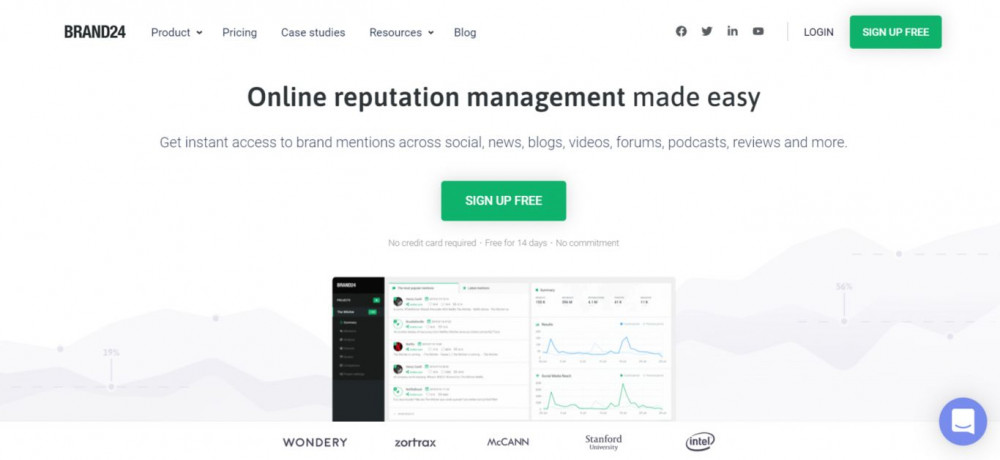
Brand24 allows you to listen to and manage the countless conversations that happen online on a daily basis by tracking keywords across various social media platforms such as Twitch, Facebook, Instagram, YouTube, Twitter and TikTok. Moreover, it also offers excellent analytics to improve your marketing strategy and overall branding.
talkwalker
Talkwalker can be used to track and index billions of data points every day from over 150 million websites, forums and blogs, as well as all the most important social channels. In fact, you can use its platform to view data going back two years.
Social channel analytics and competitive intelligence are especially useful for competitor analysis. With these features, you can get detailed information across all your social media channels to understand how your metrics compare.
BrandMentions
BrandMentions offer more than just basic social perception. Instead, it gives brands the ability to get a complete picture of every mention online. In other words, like Talkwalker, it is expanding its focus beyond the mainstream social media platforms to non-social sites as well. So, if a brand is mentioned in a news story, blog, or review site, BrandMentions will find it, index it, and inform you.
However, for competitive analysis, you need to choose a plan that supports various projects. This way, you can monitor your competitor's keywords and social media in addition to your brand and social status. Just like Brand24, you can also set certain keywords to be excluded.
With BrandMentions you can also save and organize mentions. This way you can use them as data points for further analysis. Plus, you can export your data to PDF reports so you can get started right away.
Overall, this is a worthwhile investment. By using it specifically for competitor analysis, you can use this information as a benchmark to measure your brand's success, as well as better understand the target audience and marketing strategies of your biggest competitors.
With Keyhole's data analytics feature, you can track data related to your brand, product, and competitors. Once you've set up the conditions you want to track, you can track things like reach volume, post volume, number of users, number of followers, number of impressions, and volume of interaction. Moreover, you can also use it to identify trends.
You can use it to gain insight into your brand's performance online, and it's also especially useful for competitor analysis. Using this data, you can, for example, track how your target audience interacts with competitors.
Mention
Mention's long list of services includes analysis to track specific competitors and compare key metrics. For an even more personalized search, you can use logical alerts to narrow your search, for example by limiting it to specific countries or websites.
Like Brand24, it also offers Slack integration. While real-time notifications are helpful, they also send you a daily email digest that summarizes what you're tracking. Pair this feature with its Pulse notifications, and you can easily keep track of any increases or decreases in the deadlines you choose to track.
Overall, its interface is very easy to understand and use. If you're used to tinkering with your inbox, you'll quickly become familiar with setting up Mention.
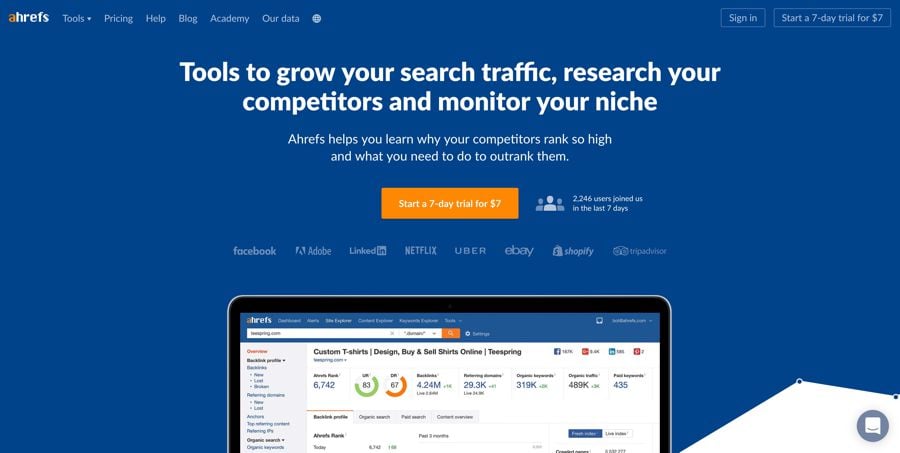
Ahrefs offers a number of tools to help you find traffic, research competitors, and track your niche. They divide their tools into:
Competitive Analysis
Keyword Research
Backlink Research
Constant research
Rank tracking
Web monitoring
A key competitive analysis tool is the Organic Research Report. This shows you the exact keywords your competitors are ranking for in organic search results and how much traffic it brings them.
You can combine data obtained from competitor analysis with their Keyword Explorer tool. It makes relevant keyword suggestions from a database of over 3 billion keywords.
Alexa is probably best known for ranking all websites in order of traffic statistics. However, it offers firms much more than just one ranking position. It provides tools that help in competitive analysis.
Since Alexa is an Amazon company, it's no surprise that Alexa provides particularly useful information for digital marketers. You can use its tool to benchmark yourself against your competitors and better understand your market.
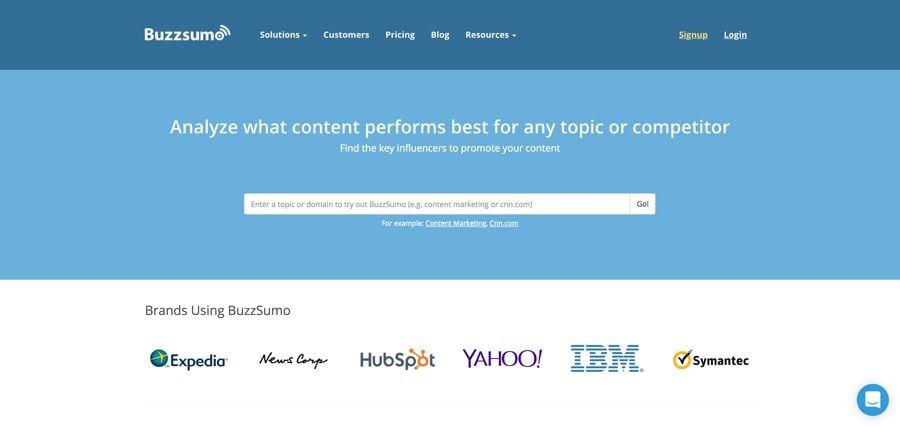
Buzzsumo helps you track popular content shared on social media. You can use it to keep an eye on your competitors by discovering which types of their content generate the most shares on social media. You can search by both URL and content niche. So, for example, you can enter your competitors' URLs to see which posts were their most popular. Additionally, you can search your niche to see who has created the most popular content on a particular topic.
Buzzsumo also produces detailed reports on the performance of competitors' content. They show where your competitors are succeeding by analyzing average shares by network, by content format, by content length, and by day of publication.
Google Advanced Search Operators
Most people limit their Google searches to just the basic operators. They may put quotation marks around the words they want to combine in their searches, but most people don't do much more than that. But Google offers much more.
Google's advanced search operators provide greater search flexibility. You can use Google search operators to set up search filters.
A typical Google search produces thousands (if not millions) of search results. Few look beyond the first page. You often see irrelevant results that you bypass.
You can use Neil Patel's All-in-One SEO tool to find out why your competitors rank so highly and how you can beat them. All you have to do is enter your competitor's domain into the field on the page. This is a free tool that gives you a good idea of how your competitor is getting their traffic.
ANY QUESTIONS?