



-


-
Business solutions
- How to Perform Keyword Analysis for Affiliate Sites
How to Perform Keyword Analysis for Affiliate Sites
Most people search for entire keywords, write blog posts, then stuff in as many affiliate links as possible.
This approach will likely mean a lot of traffic, but no clicks, conversions, or earnings.
Fortunately, there is an easy solution - find the keywords that are frequently searched and determine which ones are most suitable for articles that you can easily use to advertise products.
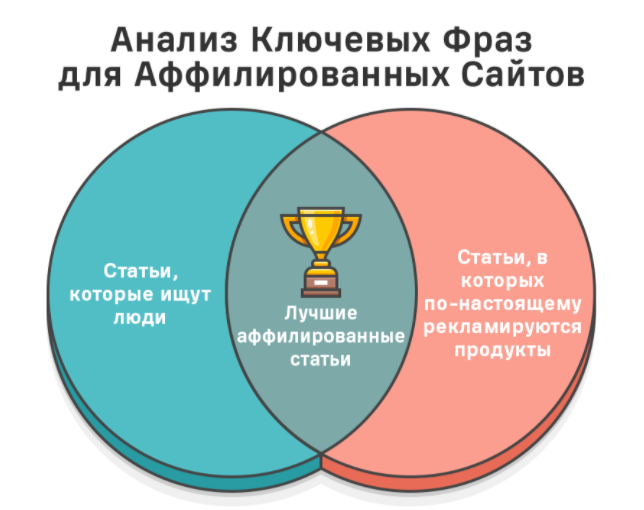
The reasons that determine the importance of this process come down to search tasks.
For example, in the market for a certain product, there is a high probability that there will be a person looking for the “best protein powder”, but who wants to weigh the pros and cons before making a purchase. Those customers are more likely to click on the link and purchase the affiliate products featured in your post.
But the person who created the query “what is protein powder” is unlikely to make a purchase soon. Most likely, he is simply looking for certain information or wants to determine the difference between types of powder. It is unlikely that he will click on the link and purchase any affiliate product.
General comparisons
If you've visited The Wirecutter, you're already familiar with general keyword comparisons. They follow a “best of [product name]” format.
Examples:
best strollers
best containers
best baby bottles
These types of posts make it very easy to recommend products because their purpose is to compare products; and people who are looking for them always go to the market in order to purchase these types of things as soon as possible. You just need to help them decide what exactly is worth buying.
To find these people, start by searching for one or two common keywords in Keywords Explorer. For example, if your site reviews baby products, you could search for "baby" and "toddler."
Keep in mind that you should not only search for keywords with a low difficulty index, because many of them refer to cheap products such as baby baths, lotions, blankets. If you strive to generate income through the use of such keywords, then you need to rely on high turnover. Therefore, you will also need to find some keywords related to the tags of higher-end products such as car seats.
Of course, keywords related to high-value products are often more in demand; But you can also find relatively low-demand options if you look for those that are related to individuals or specific needs. Typically the format is "best [product name] for [user]":
best seat for small car
best baby carrier
best stroller for walking
To find all this, you should enter the names of several expensive products in Keywords Explorer. If your site is related to products for children, it should be “car seat”, “stroller”, “cradle”.
You'll notice that most niche posts have low site authority and link to a small number of domains. Conversely, posts with a broader purpose link to more domains and are found on sites with higher authority.
Comparisons by brand
Brand comparisons use keywords using
Brand comparisons use keywords that the user seeks to convey the differences between two branded products. For example:
beats studio wireless headphones compare with bose qc35
airpods headphones compare with airpods pro
galaxy buds headphones compare with airpods
These key phrases are rarely searched for, but they work well in converted form when the user has already narrowed the range of products to a few products when selecting.
Product Description
Product description keywords are those elements that the user uses to search for detailed descriptions of individual products. For example:
bugaboo buffalo description
description of uppababy vista
selective description of babyjogger city
This is very important for affiliate sites because a user using such keywords is very close to making a purchase. He has already carried out a search and at this stage he is only concerned about choosing a specific model. Now he wants to study the product in detail before making a decision.
However, as with brand comparisons, product information search results will not be perfect. Therefore, if you need to combine products to sell with products to study, you should make sure that you find the target audience that needs exactly this.
Keywords of trust and authority
If you plan to rank your pages on Google, you will need a certain page level and site authority, which means getting backlinks. However, the types of keywords we discussed so far are commercial keywords, so it is difficult to get links to pages where they are used.
The way out of this predicament must be to apply the keywords of trust and authority. These are keywords that point to educational and informative non-profit articles you can write.
The use of such keywords provides two advantages at once:
Increased trust from your audience. People will trust your product recommendations more if you demonstrate a high level of expertise in a particular subject.
Ensuring link authority. People are generally more willing to click on links to useful, non-commercial content than on pages that are only intended to fill their wallets.
Although most visitors to these pages will not make a purchase, they will bring significant benefits to popularize the brand. You can also use the Intermediary Method to promote “commercial” pages by adding internal links to them from reliable pages that have high trust and authority scores.
The information provided will allow you to find a lot of keywords to form the content of your site, but finding keywords is only half the battle. You also need to understand how to evaluate ranking difficulty so that you can select the best articles for your site.
ANY QUESTIONS?